
Despite the movie industry’s tendency to use skin conditions to identify villains, some films portray genetic conditions sympathetically.
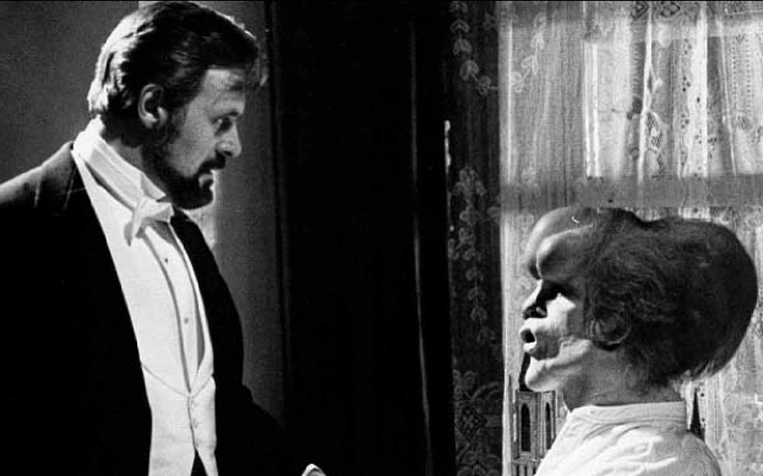
Sir Anthony Hopkins as doctor and John Hurt as patient in "The Elephant Man," the true story of Joseph Merrick who had a very rare disorder: the Proteus syndrome. Individuals develop large soft tissue growths and limb and bone abnormalities but have normal intelligence. Though present from birth, Proteus syndrome is not thought to be directly inherited.
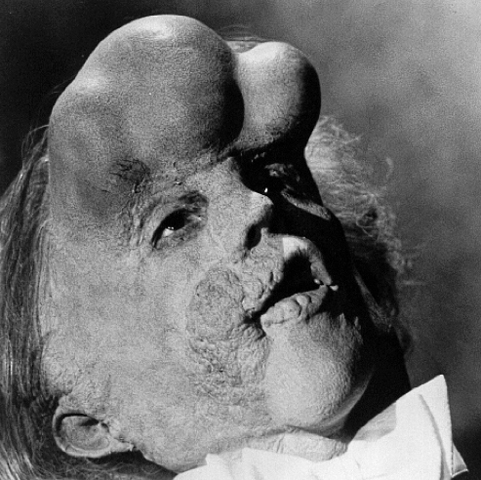
In this David Lynch film, prosthetic makeup is used to show Merrick's dramatic disorder. The film conveys his humanity equally successfully.
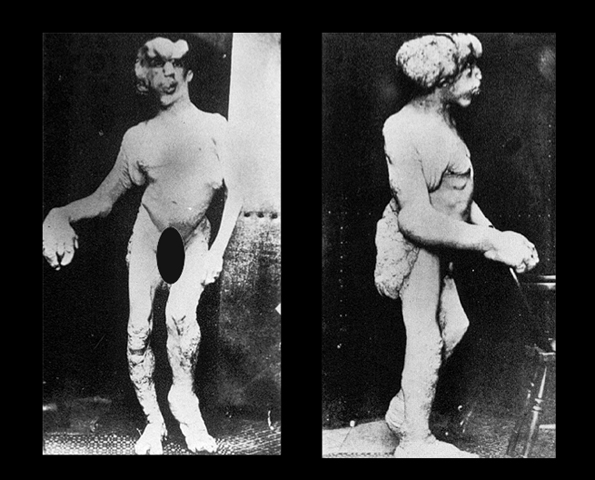
Here are images of the actual patient, Joseph Merrick. For decades, doctors thought he had an inherited condition that produces nerve cell growths known a neurofibromatosis. In the 1980's, the correct diagnosis of Proteus syndrome was made.
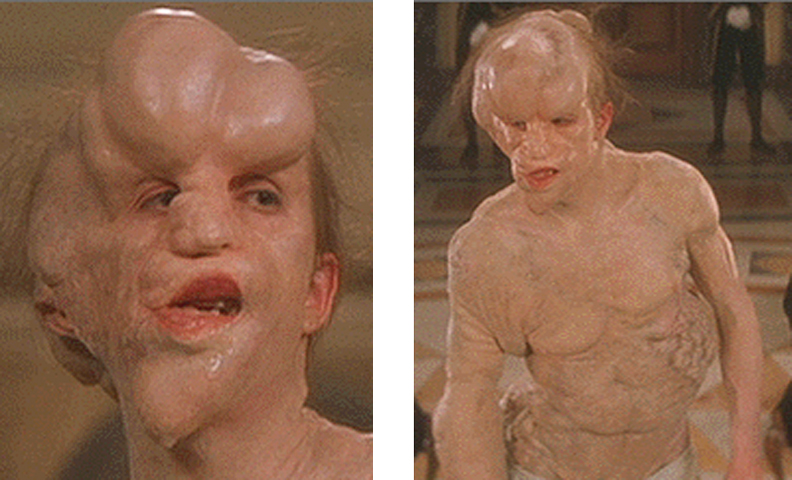
In the Johnny Depp film, "From Hell" (2001), the Elephant Man has a cameo role, being shown off at a medical conference. In real life, Merrick died while sleeping at the age of 27. His large skull likely resulted in a dislocated neck.
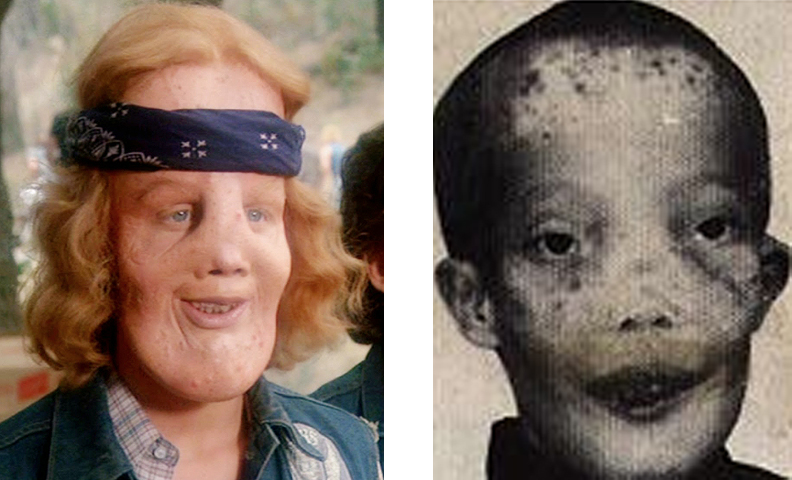
"Mask" (1985, not Jim Carrey's "The Mask"). On the left, actor Eric Stoltz is playing real-life teenager Rocky Dennis (right). Another rare disease: craniodiaphyseal dysplasia, characterized by growth and scarring of the facial bones. Clearly, the makeup adds realism to this sympathetic depiction. The makeup crew actually added teenage acne in the film version.
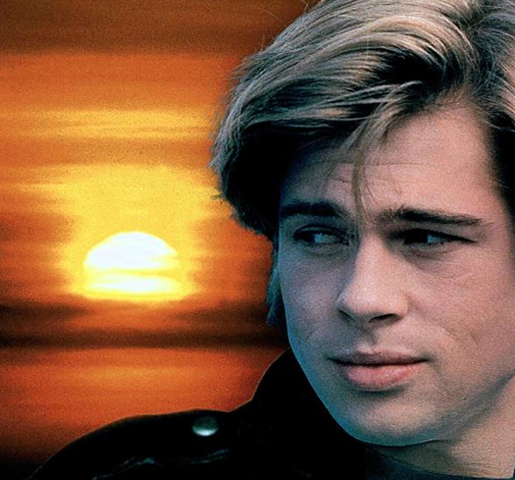
"The Dark Side of the Sun"
Ah, the joys of video. There once was a time when actors could take comfort knowing that the movies they made early in their career, films of questionable artistic value, would disappear after their brief theatrical runs, only to rarely surface on late night TV. Now with video and DVD, these possible clunkers are available to all seduced by the brightly colored packaging. Such is the case with this early Brad Pitt vehicle, "The Dark Side of the Sun." Released before he made his mark in "Thelma and Louise," this features Pitt in a sympathetic role as a mysterious biker with an inherited condition that makes his skin extremely sensitive to the sun. He is said to have "erythemosa multiforma," a disease which supposedly predisposes him to the mother of all sunburns.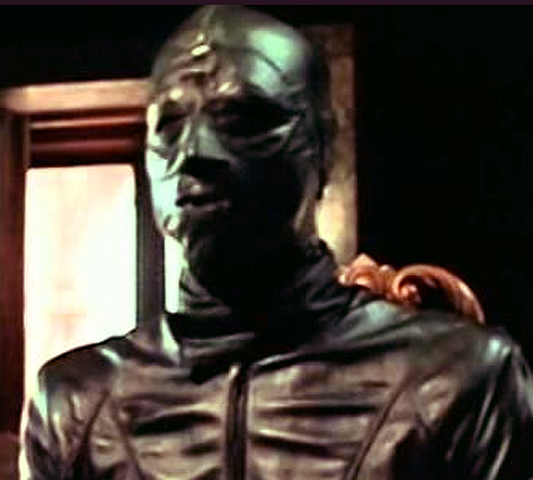
To avoid any sunlight (and risk of lethal extensive blistering) Pitt spends most of the flick encased in a protective leather suit. Even his dreamy eyes are obscured by this black shell. Eventually, he decides to chuck it all, sheds his cocoon, and rides off into the sunset on his motorcycle.
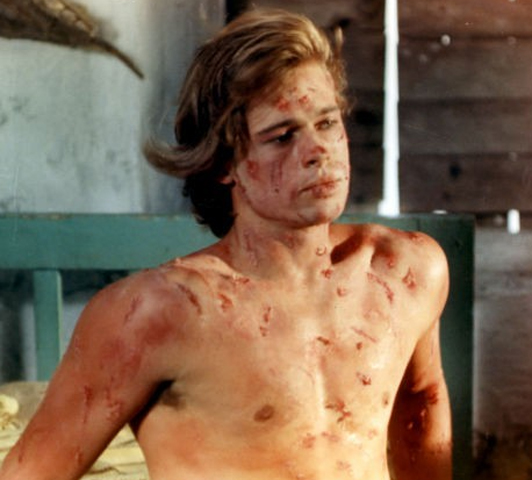
This flick exemplifies a typical Hollywood ploy--take a grain of truth and invent a whole beach. There is a condition called erythema multiforme which has nothing to do with sun exposure. It is instead an allergic reaction to medicines or infections that results in red welts and blisters. There are a few conditions where people are very sensitive to the sun. In some forms of porphyria, sun exposure can cause skin blisters, but not sudden death. A condition called polymorphous light eruption represents an allergy to sunlight that improves with repeat exposure to UV. In xeroderma pigmentosa, sun exposure over time causes very early onset of skin cancers like melanoma. Some of these children have to avoid the sun entirely--extremely difficult and isolating. We are not aware of leather suits helping with treatment of any of these conditions! Pitt's final moments on screen show his skin blistering and peeling away. This is actually the realistic appearance of severe sunburn or the blistering phase of porphyria. So the film at least got something right.
The biggest question is why cast hunkster Pitt in a part where a fair portion of his screen time is covered by a leather mask and the final few moments show his skin peeling away? Few would envision "Pitt in leather" looking like this. Any plain-lookin' playa could have portrayed the part, though they wouldn't have looked as good on the video box cover. Despite the fact that a skin condition is central to the plot, we'd have to say that "Dark Side of the Sun" represents a dark spot on Pitt's filmography.
The biggest question is why cast hunkster Pitt in a part where a fair portion of his screen time is covered by a leather mask and the final few moments show his skin peeling away? Few would envision "Pitt in leather" looking like this. Any plain-lookin' playa could have portrayed the part, though they wouldn't have looked as good on the video box cover. Despite the fact that a skin condition is central to the plot, we'd have to say that "Dark Side of the Sun" represents a dark spot on Pitt's filmography.
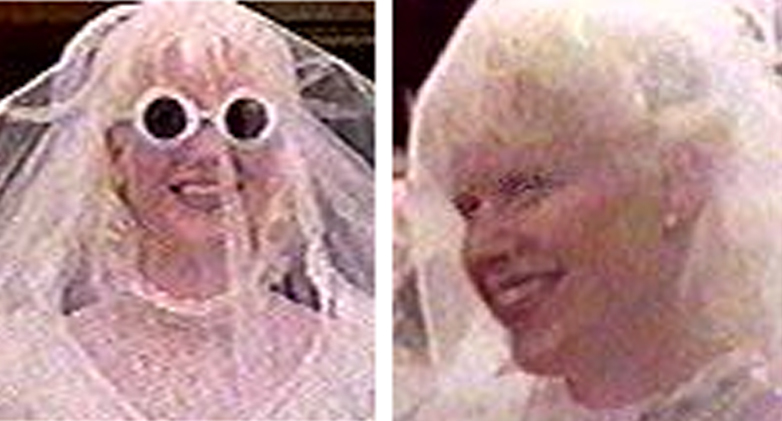
The silly romantic comedy "Nobody's Fool," (1986, not to be confused with the 1994 Paul Newman drama of the same name) is a rare example of a realistic character with albinism. A short scene features a bride posing for wedding pictures and then venturing down the aisle.
A closeup reveals light eyes suggesting that the actress herself has albinism. Though another character makes a patronizing remark about the groom marrying out of pity, this example shows someone with albinism participating in the socially sanctioned act of marriage rather than the socially questionable act of murder. Showing the bride wearing sunglasses, though done for comedic effect, underscores the importance of sun protection for both the skin and eyes of those lacking protective pigmentation.
A closeup reveals light eyes suggesting that the actress herself has albinism. Though another character makes a patronizing remark about the groom marrying out of pity, this example shows someone with albinism participating in the socially sanctioned act of marriage rather than the socially questionable act of murder. Showing the bride wearing sunglasses, though done for comedic effect, underscores the importance of sun protection for both the skin and eyes of those lacking protective pigmentation.
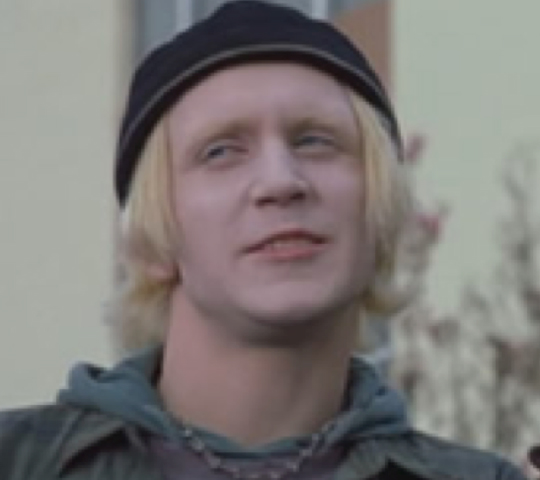
Another example of a non-evil albino is shown here. In the silly 1998 teen horror flick "Disturbing Behavior," one of the group of students is a fellow with albinism. He is nicknamed "U-Vee," presumably for the ultraviolet light from which his skin offers little protection. What makes this role extraordinary is that he is just one of the guys, unable to levitate or shoot lightening bolts from his fingers (Unlike the title character of "Powder"). Though the actor does not actually have albinism, and so is doused in whiteface makeup, this remains a bit of a breakthrough. Thank you, Hollywood, for providing us with a Normal Dude with Albinism. Perhaps an albino action hero is the next step!